IPTV vs Cable TV in the USA: Which Is Better in 2026?
Key Takeaways
- IPTV vs cable TV USA: IPTV wins on cost (70–80% cheaper), channel volume (10,000+ vs 250), device flexibility, and no contracts.
- Cable wins on reliability guarantees, zero internet dependency, professionally managed setup, and no risk of provider disappearing overnight.
- The average US cable bill of $94/month buys access to ~250 channels; IPTV at $20/month buys 10,000+ channels with VOD included.
- Sports fans have specific considerations — some regional sports networks are harder to find on IPTV than on cable.
- The US cord-cutting trend is unambiguous: 45 million households have cut cable since peak in 2012, with IPTV among the primary alternatives.
When Americans ask about IPTV vs cable TV USA, they're typically asking one of two questions: "Can I actually replace my cable bill with IPTV?" and "What am I giving up if I switch?" Both questions deserve honest answers. This head-to-head comparison covers every dimension that matters to US consumers in 2026, with real pricing data and an unvarnished look at where each service wins and where it falls short.
The Price Reality: Cable vs IPTV
This is where the comparison begins for most people, and the gap is dramatic.
Cable TV Pricing in 2026
Major cable provider pricing (standalone TV service, before internet):
- Comcast Xfinity: $20–$110/month (introductory) → $77–$120/month (standard rates)
- Spectrum TV: $59.99/month (intro, 125 channels) → $89.99/month (standard)
- Cox Communications: $35–$120/month (intro) → $80–$130/month (standard)
- Optimum (Altice): $50–$110/month
These are cable TV prices only — without internet service. Most US households need internet separately ($55–$80/month for standalone broadband) unless bundling.
The true cable bundle math: Cable + Internet bundle: $130–$180/month after promotional period Internet only (after canceling cable TV): $55–$80/month IPTV subscription: $15–$30/month Total IPTV + internet: $70–$110/month versus $130–$180/month for cable bundle
Hidden Cable Costs
Cable bills consistently exceed advertised rates due to mandatory fees:
- Broadcast TV fee: $21/month average (passes regulatory costs to consumers)
- Regional sports network fee: $8–$12/month (even for households that don't watch sports)
- DVR service fee: $10–$15/month
- Additional TV box: $10/month per additional room
- Equipment rental: $5–$15/month for modem
- Taxes and franchise fees: $5–$15/month
A Comcast Xfinity package advertised at $59.99/month routinely bills at $95–$115/month after all mandatory fees are applied.
IPTV Pricing
Quality IPTV providers in 2026:
- Monthly plan: $15–$30/month
- 3-month plan: $35–$65
- 6-month plan: $60–$100
- Annual plan: $100–$180
No additional fees, no equipment rental, no broadcast TV fees, no RSN surcharges.
Full Feature Comparison: IPTV vs Cable
| Feature | Cable TV | IPTV | Winner | |---|---|---|---| | Monthly cost | $85–$120 | $15–$30 | IPTV | | Contract required | Yes (1–2 years typical) | No (month-to-month) | IPTV | | Setup complexity | Low (tech installed) | Low–Medium (DIY) | Cable | | Internet dependency | No | Yes | Cable | | Number of channels | 125–400 | 5,000–20,000+ | IPTV | | 4K content | Limited (few channels) | Yes (provider-dependent) | IPTV | | VOD library | Limited (On Demand) | Large (often 50,000+ titles) | IPTV | | DVR | Yes (cloud/hardware, fee) | Yes (catch-up, app-dependent) | Tie | | Multi-device support | 1–2 TVs | 2–5 simultaneous streams | IPTV | | Portable viewing | No | Yes (any location) | IPTV | | International channels | Very limited | Extensive (100+ languages) | IPTV | | Customer support | Managed (24/7) | Variable (provider-dependent) | Cable | | Reliability | High (99.9%+ uptime) | High (varies by provider) | Cable slight edge | | Weather impact | None | None (depends on internet) | Tie | | Early termination fee | $200–$400 | None | IPTV | | Local channels | Yes (all) | Yes (most) | Tie | | Sports packages | Comprehensive | Comprehensive (varies) | Tie | | Catch-up TV | Limited | Yes (most providers) | IPTV |
Channel Selection: Quality vs Quantity
Cable typically offers 125–400 channels depending on your package. Spectrum Select (their entry-level package) includes 125 channels; Comcast Xfinity's "Ultimate TV" package includes 185+ channels.
IPTV providers routinely list 10,000–20,000+ channels. But raw channel count is less important than whether the specific channels you watch are available.
US Channels on IPTV
Quality IPTV providers include:
- All major US broadcast networks and affiliates (ABC, NBC, CBS, FOX, PBS, CW)
- US cable news (CNN, Fox News, MSNBC, HLN, CNBC, Bloomberg)
- Sports (ESPN, ESPN2, FS1, FS2, NBCSN, CBS Sports Network, TNT, TBS)
- Entertainment (USA, FX, AMC, TLC, HGTV, Food Network, Bravo, Discovery)
- Kids (Disney Channel, Nickelodeon, Cartoon Network)
- Movies (TCM, IFC, Sundance)
The Regional Sports Network Problem
Regional Sports Networks (RSNs) — Bally Sports (formerly Fox Sports Regional), YES Network (New York Yankees), NESN (Red Sox), ROOT Sports, etc. — are the most difficult channels to replace on IPTV.
RSNs carry local team games (MLB, NHL, NBA) that aren't nationally broadcast. Cable providers carry RSNs; IPTV providers' RSN availability varies significantly. Some IPTV services include RSN streams, but reliability varies.
Alternatives if your IPTV provider lacks your RSN:
- MLB.TV (out-of-market games, $119/season with blackout restrictions)
- NBA League Pass (out-of-market games, $14.99/month)
- Attend games in person for must-see matchups
- FuboTV (licensed vMVPD with most RSNs, but $83/month)
DVR Capabilities: Cable vs IPTV
Cable DVR
Cable DVR is mature, reliable technology:
- Comcast Xfinity X1: Cloud DVR, 150 hours of storage, $10–$15/month extra
- Spectrum DVR: 10 hours on-box, cloud DVR add-on available
- Cox Contour: 100+ hours cloud DVR
Cable DVR records any channel and stores recordings for months. It's a polished, fully integrated experience.
IPTV DVR / Catch-Up TV
IPTV approaches DVR differently:
- Catch-up TV: Most quality IPTV providers offer 7–30 days of catch-up — the ability to go back and watch any channel's recent programming. This covers 80–90% of DVR use cases.
- External network PVR (nPVR): Some IPTV providers offer cloud recording that functions like cable DVR — you schedule recordings in the app.
- TiviMate recordings: The TiviMate app on Android TV/Fire TV supports local recording to connected USB storage, giving you true DVR functionality.
For most households, catch-up TV adequately replaces DVR. The main limitation: catch-up TV covers only recent programming (last 7–30 days), not long-term storage of recordings.
Setup and Reliability: Where Cable Still Has an Edge
Cable Setup
Cable installation is fully managed: a technician comes to your home, runs cable if needed, installs the equipment, tests every TV, and leaves when it's working. You call a number when something breaks, and a technician comes to fix it. If you're not technically inclined, this managed approach has real value.
IPTV Setup
IPTV requires self-service setup. For most people, this takes 20–30 minutes and involves:
- Buying a streaming device if needed (Fire TV Stick, $30–$60)
- Installing an IPTV app (TiviMate, Smarters — free)
- Entering credentials provided by your IPTV provider
- Configuring EPG
The barrier is low but non-zero. Tech-averse users may find it challenging. Tech-comfortable users find it trivially simple.
Reliability Comparison
Cable reliability is excellent — most US cable systems maintain 99.9%+ uptime, and when issues occur, you can call for a technician. IPTV reliability depends on:
- Your internet connection reliability
- The IPTV provider's infrastructure reliability
- The CDN performance on your network path
Quality IPTV providers also maintain 99.9%+ uptime. But when your IPTV has issues, you're troubleshooting yourself — checking internet speed, restarting the app, contacting provider support via chat/ticket rather than calling a dedicated US-based phone number.
Contract and Commitment: A Major IPTV Advantage
Cable contracts are a persistent consumer frustration:
- Comcast Xfinity: 12-month minimum contract for advertised rates; cancel early and pay up to $250
- Spectrum: No annual contract (rare exception in cable)
- Cox: 12–24 month agreement for promotional pricing
- DirecTV: 24-month contract with $480 early termination fee maximum
IPTV services are uniformly no-contract, month-to-month. You pay for a month, you can cancel at any time. Many providers offer refunds within 24–48 hours if you're dissatisfied after receiving credentials.
This freedom has practical value: if your IPTV provider's quality degrades, you cancel and try another. No fees, no negotiations, no retention specialist calls.
Legal Considerations
Cable TV is entirely legal — you're paying a licensed content distributor for authorized access.
IPTV's legality depends on the provider:
- Licensed IPTV: Legal — the provider has licensing agreements with content owners
- Unlicensed IPTV: Illegal under copyright law — the provider distributes content without authorization
The consumer's responsibility is to choose licensed providers. Reputable providers will disclose their licensing relationships. See our recommendations at top 5 IPTV providers in the USA for vetted licensed options.
Pro Tip: Before paying for an IPTV subscription, ask the provider one question: "Which channels do you hold broadcast distribution licenses for?" A legitimate provider can answer specifically. If they give you a vague non-answer or change the subject, that's a signal. Licensed providers are proud of their content rights — it's a key differentiator.
Who Should Choose Cable?
Cable is the better choice if:
- Your home internet connection is unreliable (outages, slow speeds)
- You have no interest in technical DIY setup
- Emergency broadcast capability during internet outages is important
- You require specific regional sports networks that no IPTV provider carries
- Your household includes older adults who strongly prefer the traditional cable interface
Cable is worth keeping alongside IPTV if:
- You have a promotional rate that brings cable below $30/month (rare but possible)
Who Should Choose IPTV?
IPTV is the better choice if:
- You have reliable broadband (25+ Mbps)
- You want to reduce your TV bill significantly
- You need international channel options
- You watch on multiple devices or locations
- You want the flexibility to change providers without contract penalties
- You're comfortable with basic app installation
For most US households with a reliable 50+ Mbps broadband connection, IPTV delivers a superior total value proposition compared to cable. The $60–$90/month in savings is real, the channel count is genuinely larger, and the flexibility is dramatically better.
The 5-Year Cost Comparison
| Service | Year 1 | Year 2 | Year 3 | Year 4 | Year 5 | 5-Year Total | |---|---|---|---|---|---|---| | Cable TV (at $100/mo) | $1,200 | $1,200 | $1,200 | $1,200 | $1,200 | $6,000 | | IPTV (at $20/mo) | $240 | $240 | $240 | $240 | $240 | $1,200 | | Hardware (one-time $60) | $60 | $0 | $0 | $0 | $0 | $60 | | IPTV Total | $300 | $240 | $240 | $240 | $240 | $1,260 | | Savings with IPTV | $900 | $960 | $960 | $960 | $960 | $4,740 |
The Verdict
For the majority of US consumers with a reliable broadband connection, IPTV wins the IPTV vs cable TV USA comparison decisively on financial grounds alone. The $4,740 in 5-year savings is not marginal — it's transformative. When you add the flexibility advantages (no contracts, multi-device, portable), larger channel selection, and included VOD libraries, the value proposition becomes overwhelming.
Cable's remaining advantages — reliability guarantee, zero internet dependency, managed setup — are real but serve a narrowing audience. As US broadband reliability improves and IPTV provider quality matures, even these advantages diminish.
For a broader perspective on alternatives, see our guides on IPTV vs satellite TV: cost-benefit analysis and IPTV vs OTT in 2025. For provider recommendations, see top 5 IPTV providers in the USA.
Frequently Asked Questions
Is IPTV better than cable TV in the USA?▾
For most US households, IPTV offers more channels, more flexibility, and dramatically lower costs than cable. Cable maintains advantages in guaranteed reliability, zero internet dependency, and fully managed setup. The right choice depends on your internet connection quality and how much you value simplicity over savings.
How much cheaper is IPTV than cable in the USA?▾
Cable TV averages $85–$120/month in the USA. Quality IPTV subscriptions run $15–$30/month — a savings of $65–$90/month or $780–$1,080 per year. Over three years, the savings can exceed $3,000.
What are the downsides of IPTV compared to cable?▾
IPTV requires a reliable internet connection (25+ Mbps), some technical setup, and relies on your internet staying online. Cable works even during internet outages, includes professional installation, and has fully managed customer support. Unlicensed IPTV providers also carry legal and reliability risks.
Ready to cut the cord?
Try IPTV US — 10,000+ Channels from $6.99/mo
HD & 4K streaming, sports, movies, and live TV on any device. No contracts. Free trial available.
View Plans & PricingDigital Entertainment Writer
James covers the business and consumer side of streaming — provider reviews, pricing comparisons, sports broadcasting rights, and the legal landscape of internet TV in the United States. With a background in media journalism, he brings clarity to complex topics like IPTV legality, sports streaming rights, and the ongoing shift away from traditional pay TV.
Comments
Comments are coming soon. Have a question? Contact us.
Related Articles
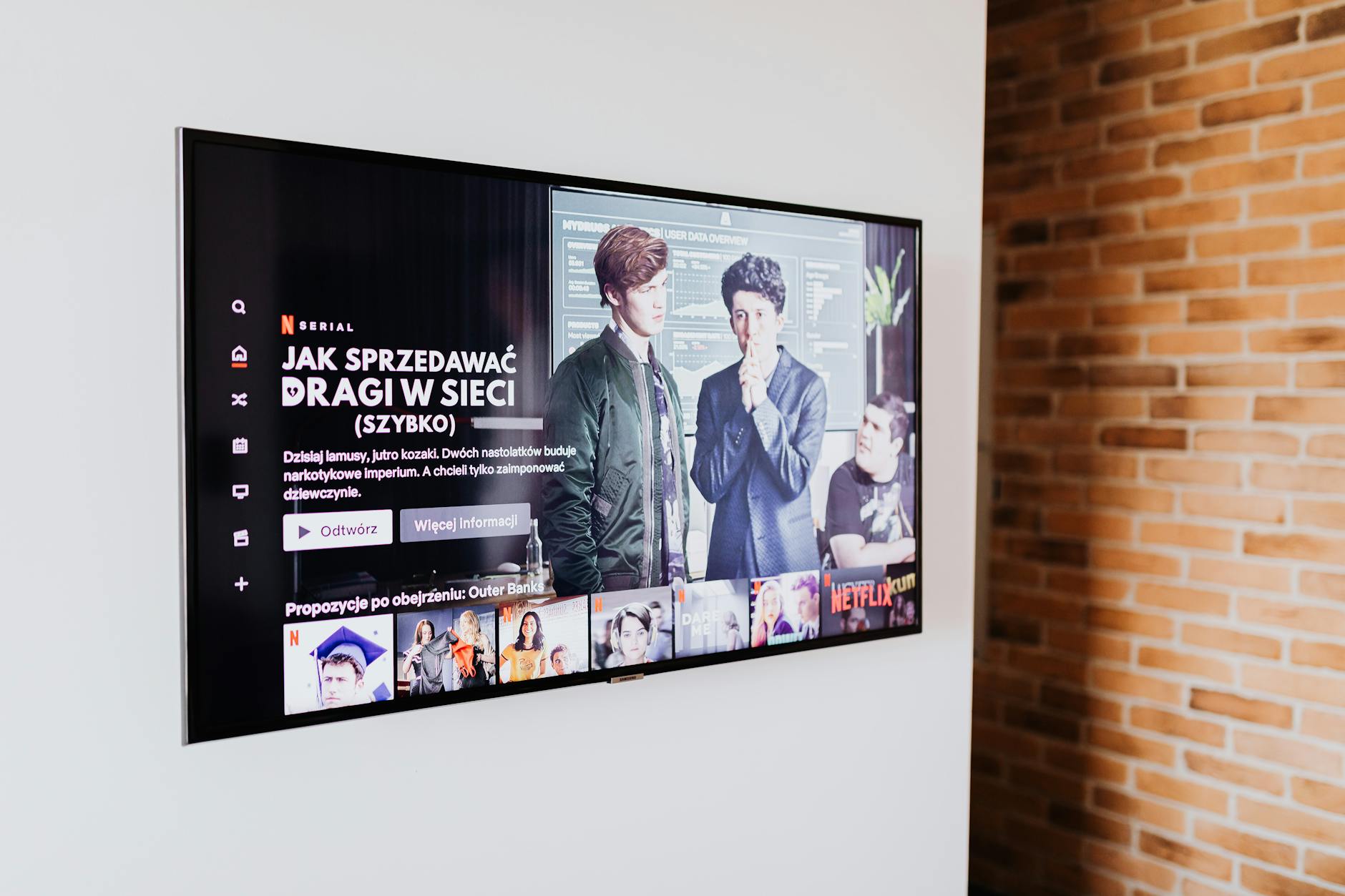
The Ultimate Streaming Guide for USA Cord Cutters (2026)
The complete streaming guide USA 2026 for cord cutters: compare IPTV, OTT, and free streaming options plus a savings calculator to cut your cable bill.
Smart IPTV: The Future of Home Entertainment in 2026
Smart IPTV home entertainment is redefining TV in 2026 — AI recommendations, voice control, smart TV integration, and IoT ecosystems creating the living room of the future.
How IPTV Is Enhancing Home Entertainment in the USA
Discover how IPTV home entertainment USA is being transformed — from 4K HDR home theater setups and multi-room streaming to smart home integration and whole-home IPTV.